Pressure-treated or cedar?
Picking between wood and cedar decks is the first call most Fort Collins homeowners make. It’s a good one to settle early.
We build in two woods: pressure-treated lumber and cedar. Both go on the same kind of frame.
Pressure-treated lumber is wood that has been treated at the mill. It’s what most deck frames are built from, and it makes a solid deck surface too. Cedar is a different wood, with a reddish color and a straighter grain.
Cedar costs more. Industry price guides commonly put it anywhere from about 50% more to double the price of pressure-treated boards.
| Pressure-treated | Cedar | |
|---|---|---|
| Look | Greenish-tan at first, takes stain well | Reddish tone, straighter grain |
| Cost | Lower | Higher |
| Best used for | Frame and deck surface | Boards, stairs and railing |
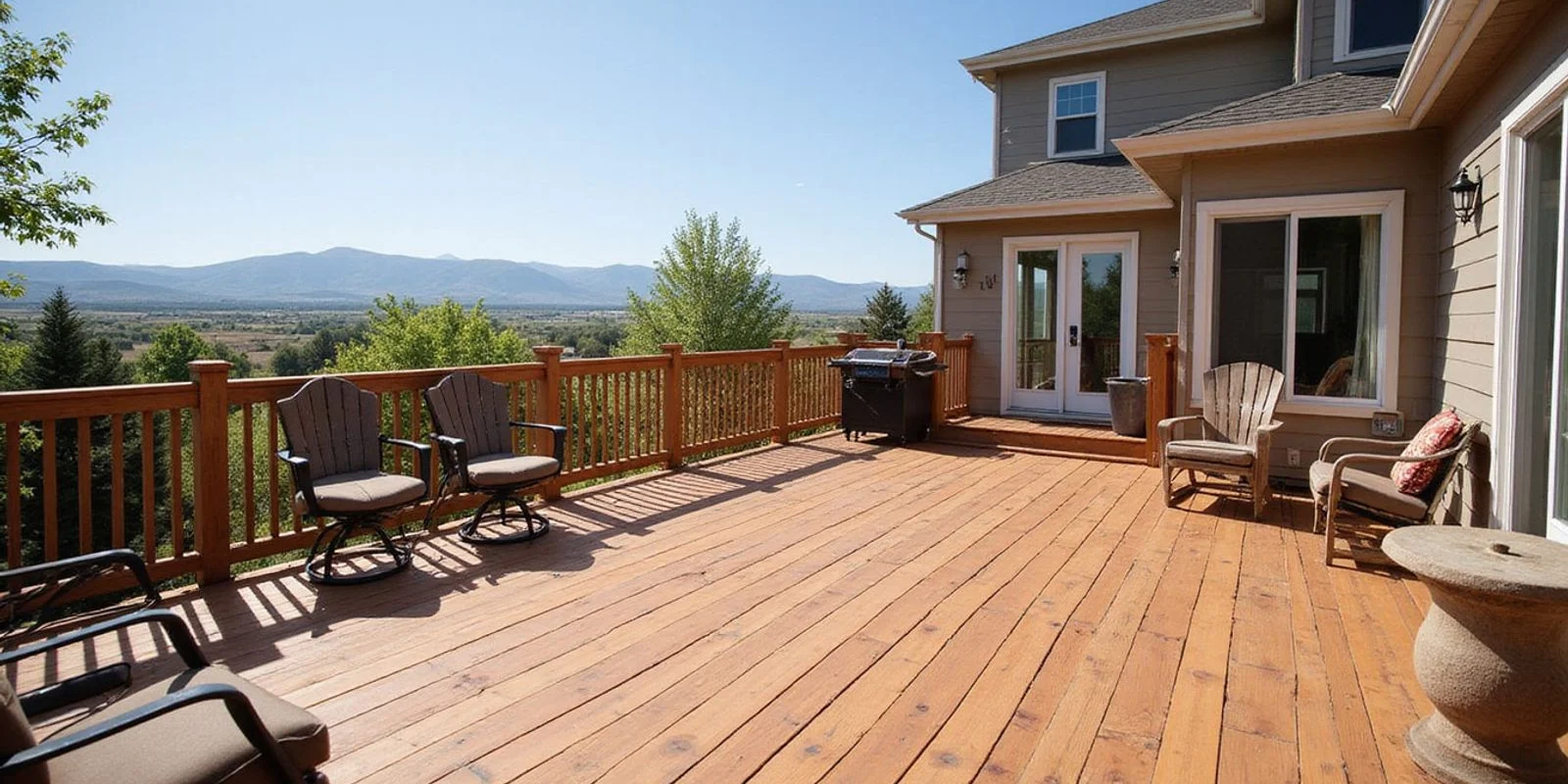
A lot of cedar decks sit on a pressure-treated frame, with cedar boards, stairs and railing on top. You get the look where you see it and save where you don’t. We go through both options at the estimate, with a price for each.
What a wood deck is made of
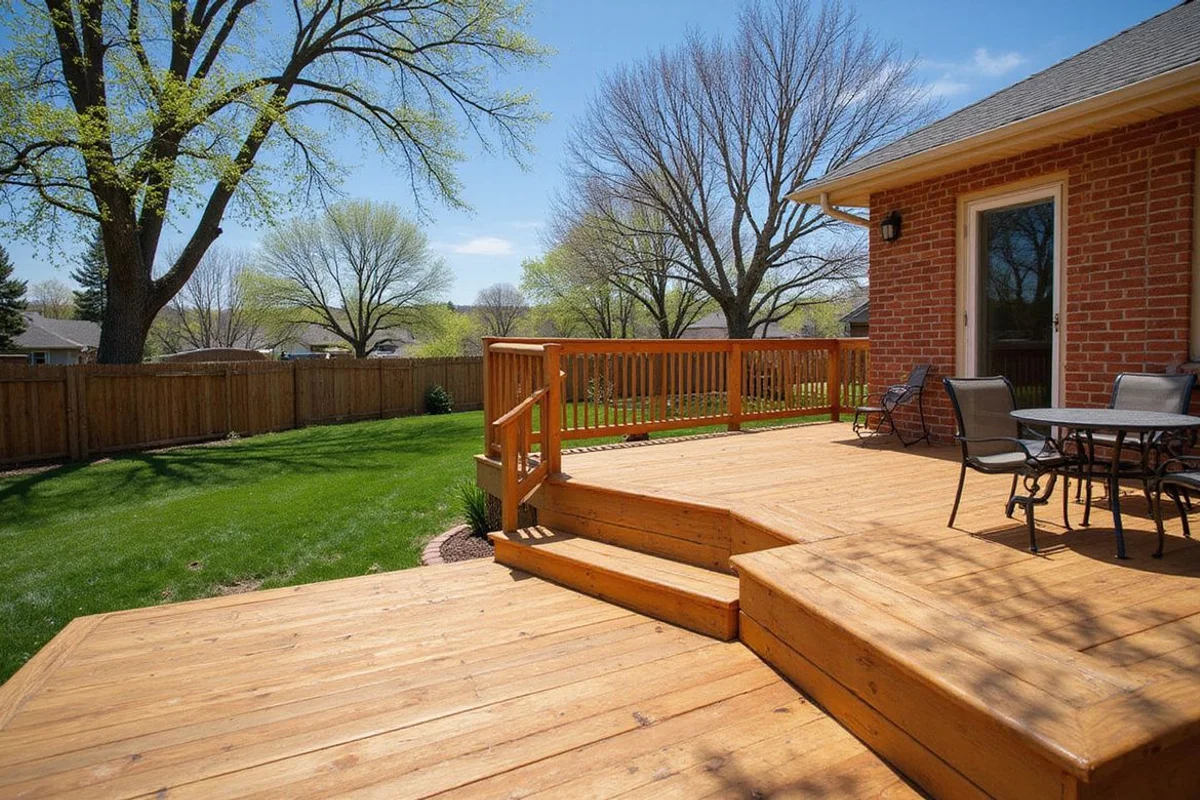
A wood deck starts with concrete footings, then posts, beams and joists. Deck boards run across the joists.
Wood stairs come down to the yard on stringers. A wood railing runs around the edge on posts fastened into the frame.
Footings matter most here. The City of Fort Collins residential deck guide lists a 30-inch minimum frost depth, so footings for an attached deck go down at least that far.
That’s the same build as any new deck. The deck building page goes through it step by step.
Wood decks need stain every few years
A wood deck takes a penetrating stain. A gray deck has lost its color to the weather at the surface, and stain brings the color back.
A penetrating finish needs a fresh coat every few years. Semi-transparent stains typically last about two to three years, and clear sealers often need a refresh sooner. Colorado sun is hard on bare wood, so don’t push it.
Paint and solid stains tend to peel on a surface you walk on. That’s why we use a penetrating stain on decks.
If your wood deck is already built and has gone gray, that’s deck staining and sealing.
Checking and splitting
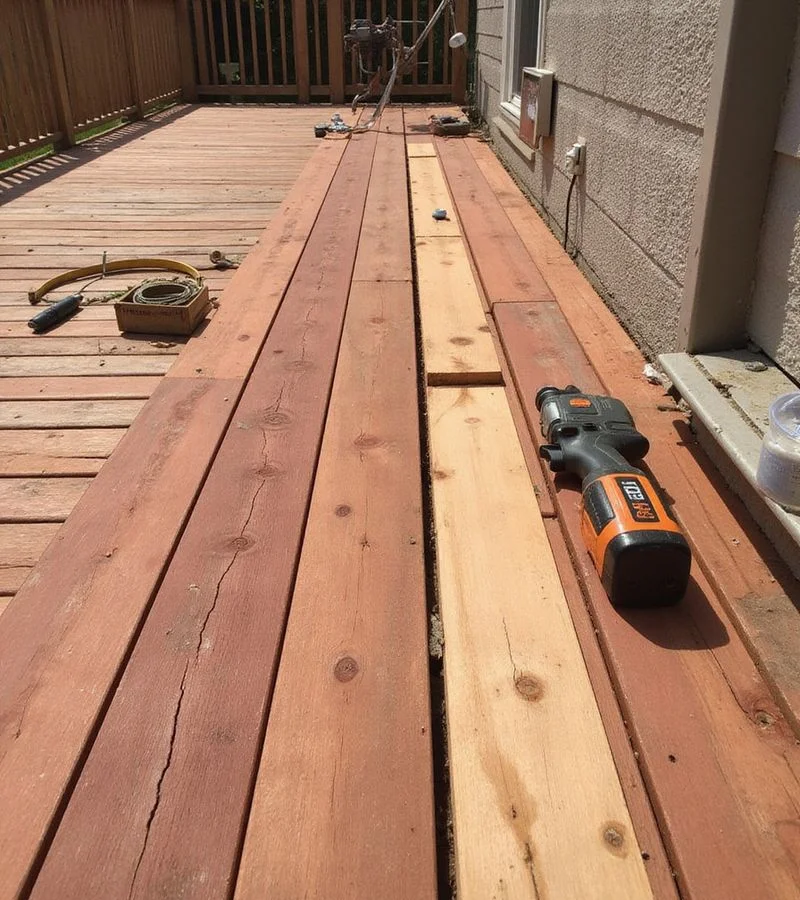
Wood decks here are replaced more often because the boards check and split than because of rot. Checking is the small cracks that open along the grain of a board.
The cause is moisture cycling. Wood soaks up water and dries out again, over and over, and the surface cracks as it moves. A fresh coat of stain slows that down by keeping water from soaking in so fast.
Here’s how we sort out what to do:
- A few split boards: a repair can take care of them.
- Most boards split: it’s time to look at a replacement.
- Not sure which you have: we’ll walk the deck with you and tell you straight.
Wood or composite?
Composite costs more than wood. We can price both at the estimate, so you see real numbers side by side.
If you’d like to read about the other option, see composite decks. When you’re ready, ask us for an estimate, and we’ll price your wood and cedar deck both ways.