What goes into a new deck?
Deck building in Fort Collins follows the same order every time, whether the deck is a small landing at the back door or a full deck across the back of the house. Here’s the sequence we work through:
- Footings
- Frame
- Deck boards
- Stair stringers and treads
- Railing posts and railing
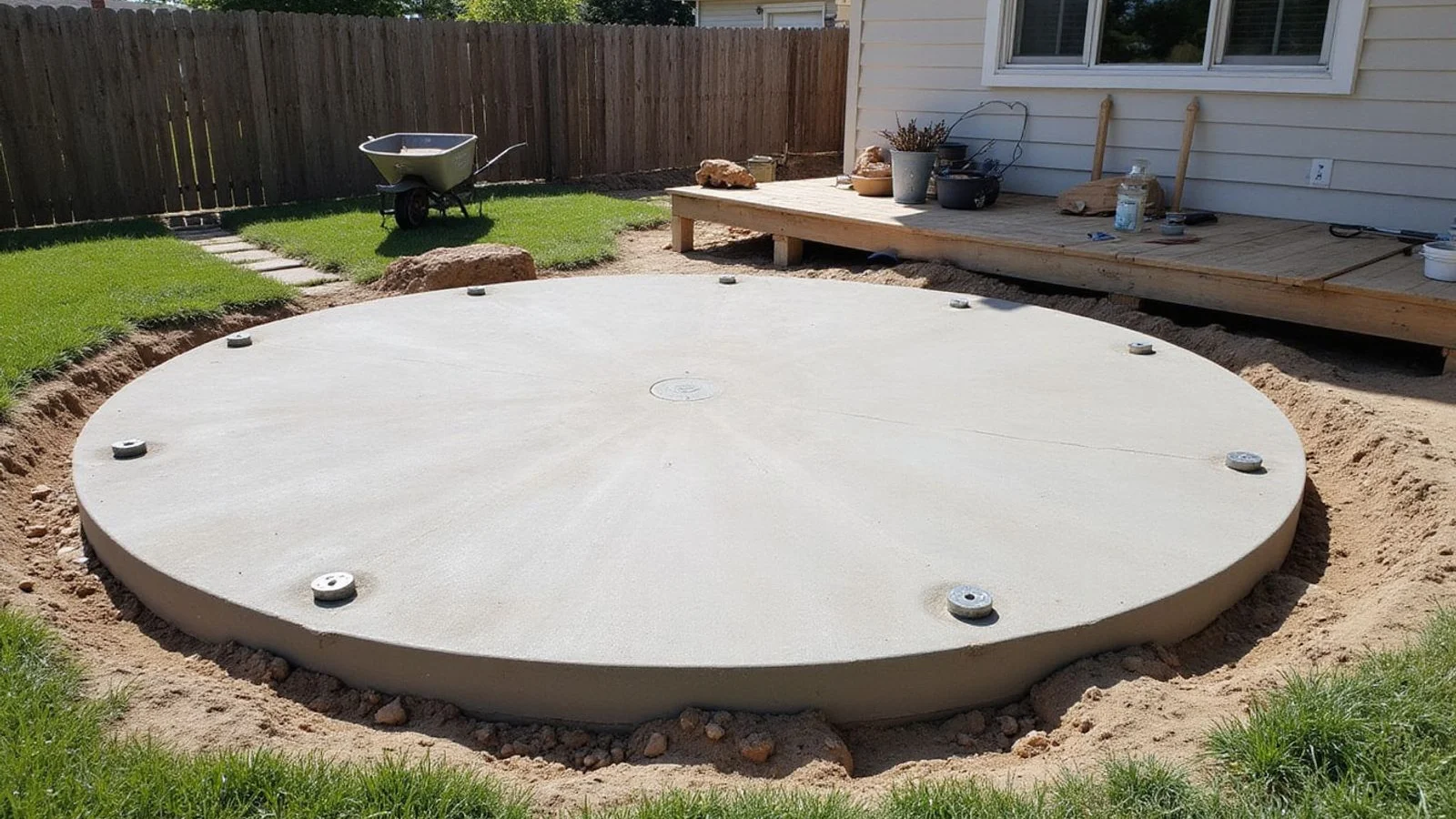
The footings are concrete, set in the ground below the frost line. Fort Collins uses a 30-inch frost depth, so footings go at least that deep. Posts stand on the footings, beams sit on the posts, and joists run across the beams.
On a deck attached to the house, a ledger board fastens the frame to the house itself. A freestanding deck skips the ledger and carries its own weight on footings at both ends. Decks more than 30 inches above the ground need a building permit in Fort Collins, and we’ll tell you up front what yours needs.
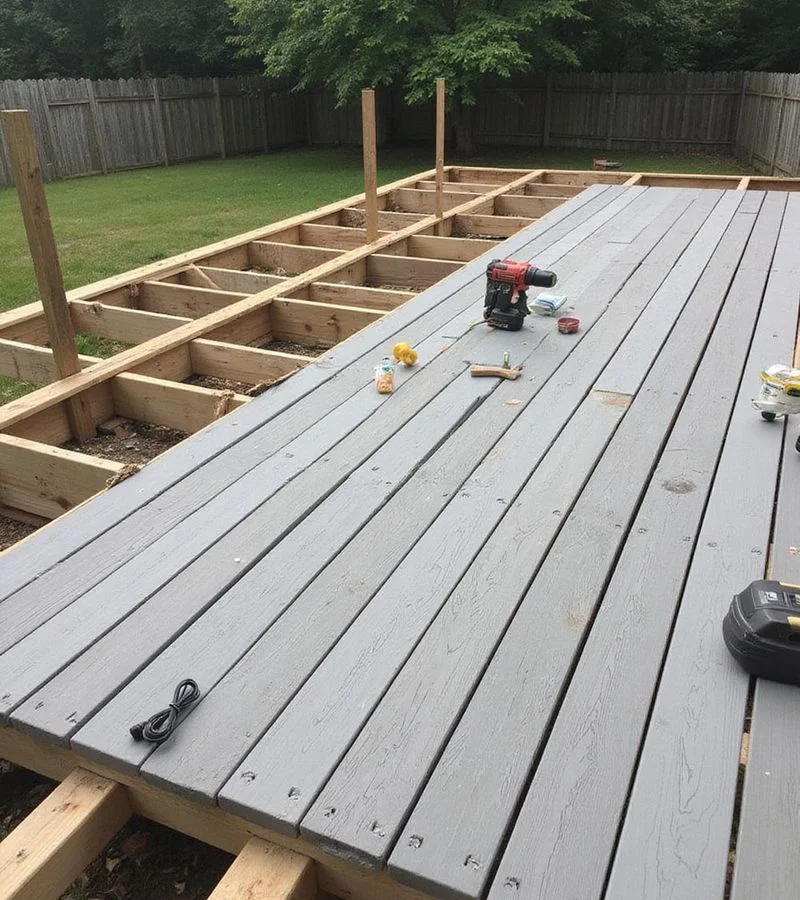
Once the frame is square and solid, the deck boards go on. We build in pressure-treated wood, cedar and composite. Cedar costs more than pressure-treated, and composite costs more than wood. Then come the stair stringers and treads, and the railing posts and railing around the edge.
Railings and stairs live here too
New railings and stairs are part of deck building, whether they go on a new deck or on a deck that’s already there. Is your deck fine but the railing tired? Do you want a second set of stairs down to the yard? That’s work we do on its own.
A railing starts at the posts. They’re fastened into the frame, not just the boards, and the railing runs between them. Residential code calls for a guard at least 36 inches tall once a deck sits more than 30 inches off the ground. Gaps between balusters have to stay small enough that a 4-inch sphere can’t pass through, which keeps small kids and pets safe.
Stairs start with stringers cut to the height of the deck, then treads across them, and a railing alongside. Each step has to be the same height as the others. Code caps the rise at 7¾ inches, and even a half-inch difference between steps is what makes people trip.
Decks we build often
A deck off the back door
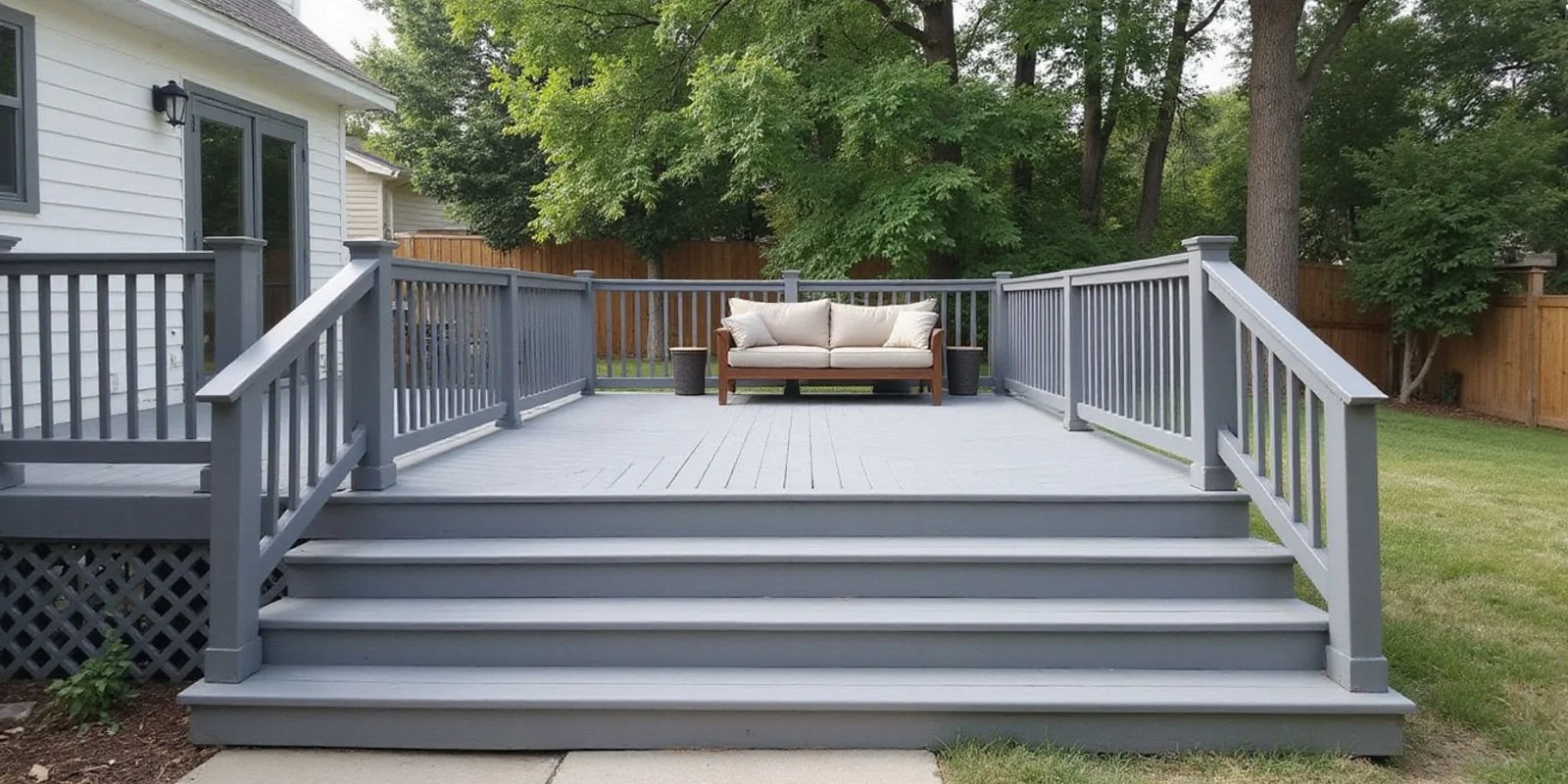
The most common deck we build sits a few steps above the yard off the back of the house, about 16 by 20 feet, with railing around it. It’s attached with a ledger board and stands on footings at the outer edge.
The ledger is where water tends to sneak in, so flashing behind it matters as much as the bolts. If your house has brick, masonry or stone veneer, Fort Collins asks for stamped engineered plans on an attached deck. We’ll flag that at the estimate so it doesn’t surprise you later.
A freestanding deck in the yard
Some decks stand on their own, out by a tree or at the far end of the lawn. A freestanding deck has footings on every side and no ledger, and it can be low to the ground or a step or two up.
Nothing on the house holds it steady, so we add bracing to keep it from swaying side to side.
A deck built for a hot tub or a pergola
A deck carrying a hot tub, or one with a pergola or cover sitting on it, needs engineered plans in Fort Collins. A full hot tub with people in it can weigh several thousand pounds. A standard deck is built for about 40 pounds per square foot, so the difference is big.
The frame and footings are sized for the load from the start, not added later. That’s the only way to keep a deck from sagging under the tub.
A second-story deck
A deck off an upstairs door sits higher, so the posts are taller and the stairs are longer. A deck stacked on another one needs engineered plans here too.
Wood or composite?
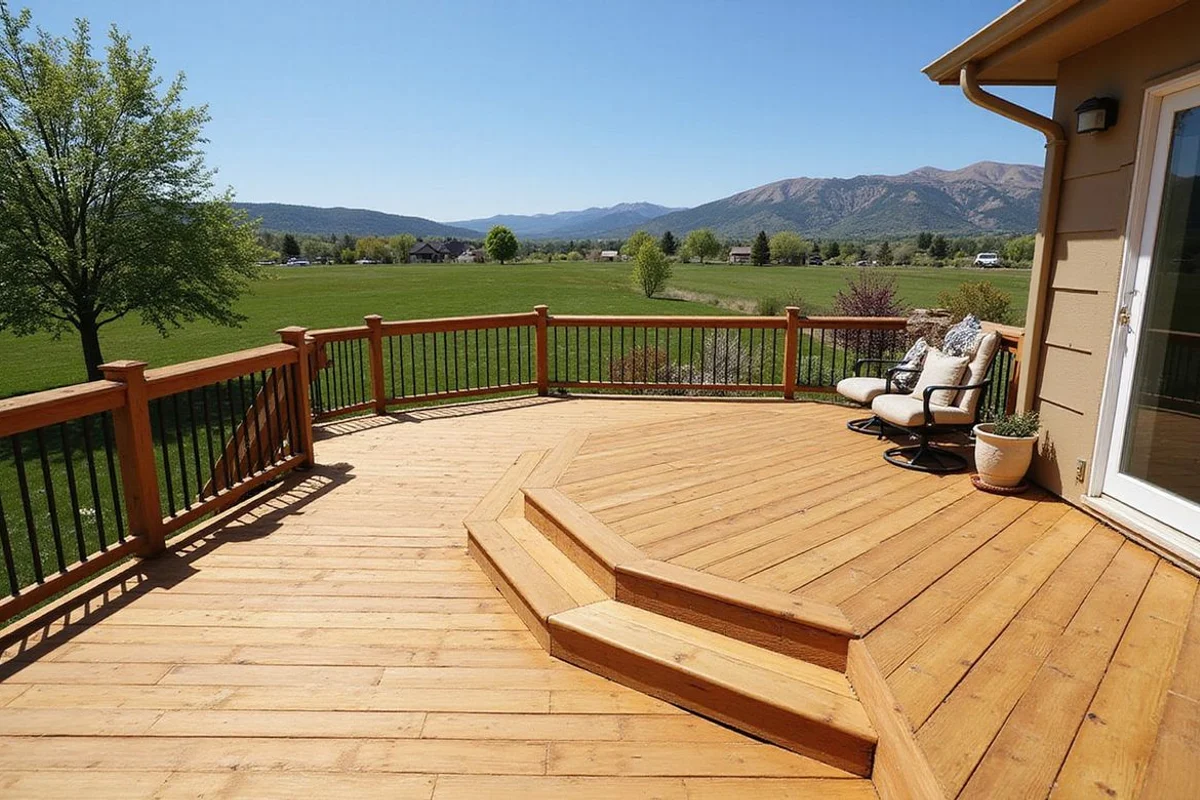
Both go on the same kind of frame. A wood deck is pressure-treated lumber or cedar, and it takes a penetrating stain that needs refreshing every few years. Composite decking, which a lot of people call Trex, comes in grays and browns.
| Pressure-treated | Cedar | Composite | |
|---|---|---|---|
| Upfront cost | Lowest | Middle | Highest |
| Upkeep | Stain every few years | Stain every few years | Occasional washing |
| Colors | Natural wood tones | Natural wood tones | Grays and browns |
We go through the choice at the estimate with prices for each, and you pick. Ask us for an estimate and we’ll come out, measure up and talk it through with you.